

As data volumes continue to grow, businesses need storage solutions that deliver consistent speed, reliability, and control. From backups and media libraries to enterprise databases and SaaS platforms, storage performance directly impacts operations. This is where a Dedicated Storage Server becomes essential.
Unlike shared or virtualized environments, It provide exclusive access to physical hardware. This ensures predictable performance, stronger security, and long-term scalability. Whether you are evaluating dedicated server hosting, searching for a cheap dedicated server, or comparing VPS vs dedicated server, this guide explains everything clearly so you can make the right decision.
Table of Contents
What Is a Dedicated Storage Server?
A Dedicated Storage Server is a physical server fully allocated to a single user or organization and optimized specifically for storing large volumes of data. All system resources including CPU, RAM, disks, and network bandwidth are dedicated, eliminating performance fluctuations caused by resource sharing.
To better understand this concept, it helps to know what is a dedicated server. A dedicated server is a standalone machine hosted in a data center, and when configured for storage, it prioritizes disk capacity, redundancy, and sustained I/O performance over general-purpose computing.
This are commonly used for backups, file hosting, analytics platforms, and enterprise applications that require consistent data access.
Storage Hosting Types
Not all dedicated servers are built the same. The right configuration depends on how your data is accessed and stored.
Some servers use high-capacity HDDs for cost-efficient archival storage. Others rely on SSD or NVMe drives for fast read and write speeds. Hybrid configurations combine both, offering a balance between performance and capacity.
For businesses that want reduced operational overhead, a managed dedicated server is a strong option. In this model, the hosting provider handles monitoring, updates, and hardware maintenance while you focus on your data and applications.
Storage Server Costs
Cost is often the first concern when choosing infrastructure. While a this costs more than shared hosting or VPS, it delivers unmatched performance stability and control.
Many users initially look for a cheap dedicated server for basic storage needs such as backups or internal data repositories. Entry-level servers work well for these use cases, while higher-end configurations support enterprise-scale workloads.
Pricing typically depends on storage type, disk capacity, bandwidth, redundancy options, and whether the server is managed or unmanaged. Long-term scalability should always be considered alongside upfront cost.
VPS vs Dedicated Server: Which Is Better for Storage?
Choosing between a VPS and a dedicated server depends on how critical your storage performance and reliability requirements are. The comparison below highlights the key differences.
| Feature / Capability | VPS Storage Server | Dedicated Storage Server |
|---|---|---|
| Hardware Access | Shared physical hardware | Fully dedicated hardware |
| Storage Performance | Moderate and variable | High and consistent |
| Disk I/O Predictability | Can fluctuate under load | Stable even at peak usage |
| Storage Capacity | Limited by virtual allocation | Large and expandable |
| Resource Isolation | Partial | Complete |
| Scalability | Easy short-term scaling | Best for long-term growth |
| Customization | Limited system-level control | Full hardware and OS control |
Who Should Choose Storage
A VPS storage server is suitable for individuals or small teams that need affordable storage with flexible resource allocation. It works well for development environments, small backups, or non-critical datasets.
It is ideal for businesses that rely heavily on data availability and performance. Organizations handling large datasets, compliance-sensitive data, or continuous workloads benefit most from dedicated infrastructure.
Best Suited For
VPS Storage Server
- Small databases and backups
- Testing or staging environments
- Budget-conscious projects
- Short-term or low-traffic workloads
Dedicated Storage hosting
- Enterprise data storage
- Media libraries and streaming platforms
- Analytics and big data processing
- Mission-critical backups and databases
Not Ideal For
VPS Storage Server
- High I/O workloads
- Large-scale data retention
- Performance-critical applications
- Compliance-driven environments
Dedicated Storage Server
- Very small projects with minimal storage needs
- Short-term experiments where cost must be minimal
Real Performance Benchmarks (What to Expect)
Understanding real-world performance helps set realistic expectations when choosing storage infrastructure. The comparison below outlines typical benchmark behavior across hosting environments.
| Performance Metric | VPS Storage Server | Dedicated Storage Server |
|---|---|---|
| Storage I/O Speed | Moderate | High (SSD / NVMe optimized) |
| Read / Write Latency | Medium | Low and consistent |
| Performance Under Load | Variable | Highly predictable |
| Bandwidth Throughput | Shared | Dedicated high-throughput port |
| Data Redundancy | Optional | Advanced (RAID, backups, snapshots) |
| Long-Term Stability | Moderate | Excellent |
This results in consistent I/O, better uptime, and improved data reliability.
Performance, Uptime, and Security Advantages
Performance
It deliver stable disk I/O and faster access times because resources are exclusive. SSD and NVMe configurations significantly reduce latency.
Uptime
Redundant hardware, RAID setups, and proactive monitoring help minimize downtime and ensure continuous access.
Security
Complete isolation protects your data from neighboring users. Firewalls, access controls, and regular updates strengthen security and compliance.
How to Choose the Right
Start by evaluating how much data you store today and how fast it will grow. Consider access patterns, redundancy requirements, and compliance needs.
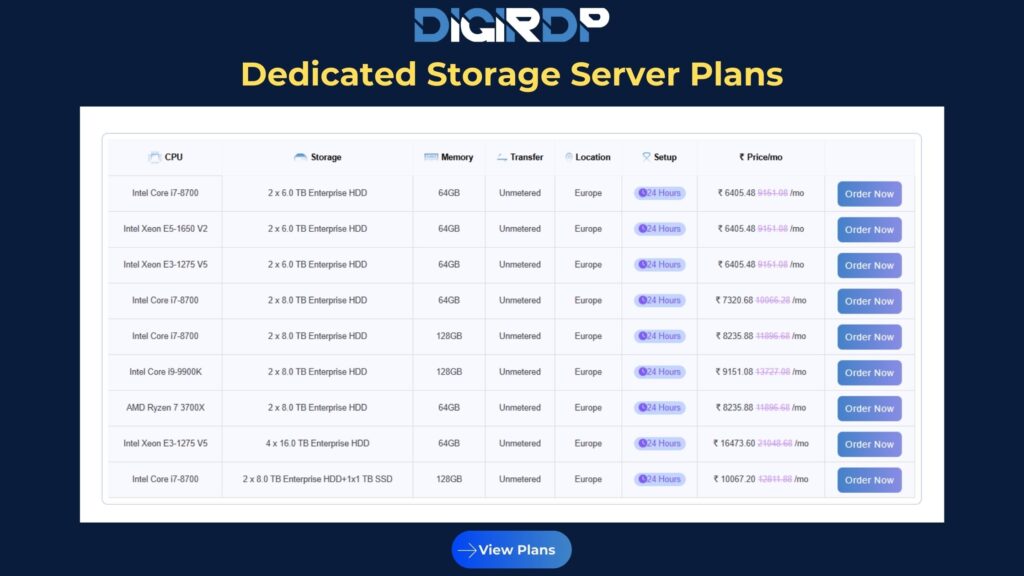
If you want full control and customization, an unmanaged server may be suitable. If you prefer expert assistance, a managed dedicated server reduces operational complexity. DigiRDP offers flexible dedicated storage solutions designed to support different workloads and budgets.
Real-World Use Cases
This are widely used across industries. Media companies rely on them for video and image libraries. SaaS platforms use them for database storage and backups. Enterprises deploy them for disaster recovery and compliance-driven data retention.
Developers and agencies benefit from predictable performance when managing multiple projects or client environments.
Why Dedicated Storage Servers Scale Better
One of the strongest advantages of dedicated infrastructure is scalability. As your data grows, you can add disks, upgrade hardware, or expand bandwidth without migrating environments.
This flexibility allows businesses to plan long-term storage strategies without performance bottlenecks or downtime.
Conclusion
A Dedicated Storage Server is the right solution for organizations that require performance, reliability, and complete control over their data. While a VPS may work for small or short-term storage needs, dedicated servers offer long-term stability and scalability.
With flexible configurations, global infrastructure, and expert support, DigiRDP enables businesses to build secure and efficient storage environments that grow alongside their data.
FAQ
1. What is a Dedicated Storage Server?
A Dedicated Storage Server is a physical server optimized for storing large volumes of data with exclusive hardware access.
3. Can I find a cheap dedicated server for storage?
Entry-level dedicated servers are available for basic storage needs, while higher-end configurations offer better scalability.
4. What is a managed dedicated server?
A managed dedicated server includes provider support for updates, monitoring, and maintenance, reducing technical workload.
5. How reliable is DigiRDP for dedicated storage hosting?
DigiRDP focuses on uptime, security, and scalable global infrastructure, making it a reliable choice for dedicated storage solutions.
Explore More About Dedicated Storage Servers
For readers seeking a deeper understanding of dedicated storage infrastructure, DigiRDP offers a regularly updated knowledge hub curated by experienced server and cloud specialists. The content focuses on real-world performance optimization, storage architecture best practices, and secure administrative configurations used in modern dedicated server environments.
By exploring in-depth articles on dedicated storage server design, deployment strategies, and long-term scalability on the official DigiRDP Blog, readers can stay informed about evolving infrastructure standards and data management best practices shaping 2026 and beyond.
